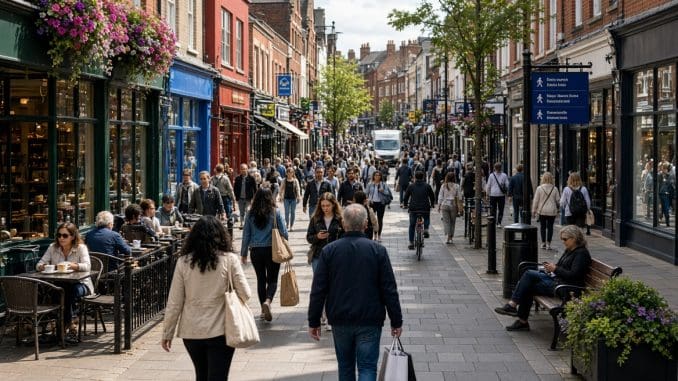
UK high streets faced another challenging month in July as scorching temperatures and dry weather kept shoppers at home, driving a -2.1% drop in overall footfall, industry figures reveal.
While the drop marks a slight recovery from June’s steep -3.4% slump—which was hit by record-breaking sunshine—six out of the seven months in 2026 have now performed worse than the previous year.
Major urban centres suffered the brunt of the heatwave. London saw footfall drop by -5.3%, with commuters and consumers opting to avoid sweltering conditions on public transport. England overall registered the weakest performance of any UK nation, down -3.0%.
Helen Dickinson, Chief Executive of the British Retail Consortium (BRC), noted:”The heatwave continued to bear down on retail footfall in July, with high streets worst affected. London was hit particularly hard as soaring temperatures made tube and train travel less attractive, with some commuters and shoppers opting to stay home.”
Despite the drop in outdoor high street visits, air-conditioned and destination-based locations provided a silver lining.
- Retail Parks: Returned to positive growth as shoppers favoured out-of-town locations with easier car access.
- Shopping Centres: Saw an uptick in visits, suggesting consumers were still willing to make targeted trips to climate-controlled venues.
Andy Sumpter, Head of Consulting & Analytics – EMEA for Sensormatic, highlighted the shift: “Consumers are still willing to visit destinations, even if they are making fewer retail trips once there. For retailers, the focus remains on converting these more selective visits into meaningful spend as the summer progresses.”
With climate change bringing frequent extreme temperatures to the UK, retailers are increasingly investing in mitigations such as commercial air conditioning, upgraded refrigeration, and energy-efficiency measures.
However, industry leaders argue current policy actively disincentivises these green investments.”Retailers are responding by investing in both mitigations and sustainability initiatives aimed at reducing carbon emissions,” Dickinson said. “Unfortunately, business rates often punish stores for such investments, showing the need for government to look again at this broken system.”
Industry watchers also noted that despite recent political shifts and the arrival of a new Prime Minister, retail has yet to see any tangible bump in consumer confidence or high street spending.