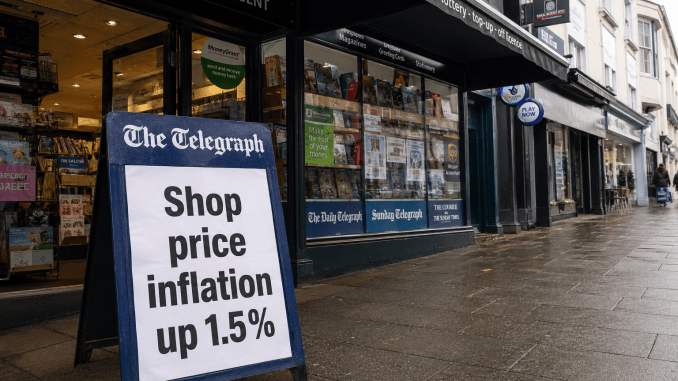
Shop price inflation in the UK accelerated sharply in August, reaching 1.5% year-on-year compared with 0.9% in July, according to the latest figures from the British Retail Consortium (BRC) and NielsenIQ (NIQ). The uptick, which sits above the three-month average rate of 1.2%, marks the highest level of shop price growth in more than two years.
The acceleration was felt across both food and non-food categories, driven by rising input costs, the conclusion of seasonal promotional campaigns, and supply chain pressures.
Food inflation climbed to 2.8% in August, up from 2.2% in July and exceeding its three-month average of 2.5%. The surge was primarily driven by ambient food—typically processed or imported goods with longer shelf lives—which jumped from 1.1% in July to 2.5% in August. In contrast, fresh food price growth offered modest relief, easing marginally from 3.1% to 3.0%, matching its three-month baseline.
Non-food categories also recorded faster price growth, rising to 0.9% year-on-year in August from 0.2% the previous month.
Helen Dickinson, Chief Executive of the BRC, noted that while shop inflation remains well below the broader headline Consumer Price Index (CPI), retailers are finding it harder to shield consumers from mounting supply-side expenses.
“The impact of higher energy, input and commodity costs is beginning to filter through into prices, particularly for ambient foods which are typically imported and processed,” Dickinson said. “In non-food, electrical prices rose amid the ongoing AI boom, which is forcing up the price of memory chips and storage. Meanwhile, retailers kept clothing prices low to offer value for families getting ready for the new school year.”
Dickinson warned of a tough period ahead for household budgets as autumn arrives, urging ministers to ease statutory burdens on the high street. She highlighted that persistently high operating costs are restricting businesses’ capacity to absorb inflation without cutting jobs, pausing investment, or raising shelf prices, calling on the government to tackle business rates, packaging levies, and employment taxes.
Industry analysts pointed out that the increase aligns with typical seasonal retail cycles. Mike Watkins, Head of Retailer and Business Insight at NIQ, highlighted that part of the uptick reflects the wind-down of summer discounting.
“While the increase in both food and non-food inflation is not unexpected, particularly as some of the summer promotional activity seen in recent months comes to an end, retailers continue to keep prices low, helping consumers manage rising household costs such as energy and fuel,” Watkins said. “However, pressures are continuing to build across supply chains, and we can expect price competition to intensify as we move into the autumn months.”