
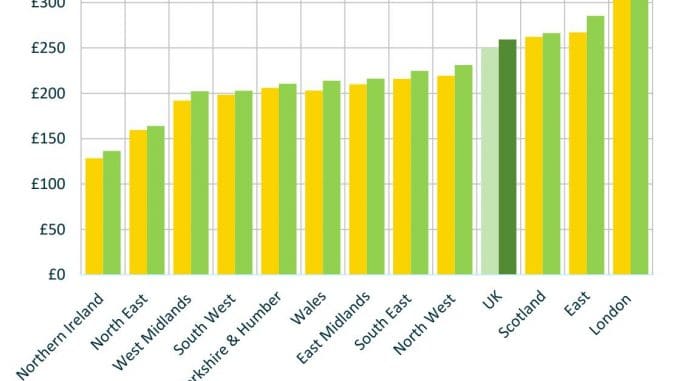
Figures from Asda’s latest Income Tracker show that families in northern regions continue to have less money left in their pockets after essential spending than those in south, despite average UK household budgets improving year on year.
Key findings from the survey show households across the North East, North West and Yorkshire and the Humber had an average of £202 a week left after essential spending in the three months to June 2026.
This was £60 less than households in the East of England, South East, London and South West, who had £262 a week remaining after bills and essential spending.
Households in London had the most discretionary income with an average of £337 a week remaining, while the East of England recorded the second-highest level at £285 and saw the strongest income growth.
In stark contrast, households in the North East had just £165 a week left after essential spending, less than half the amount available to households in London — while Yorkshire and the Humber averaged £212.
Both regions continue to face labour market challenges, with unemployment rates of 5.7% and 5.8% respectively, reflecting longer-term economic shifts away from traditional industries.
The findings come as the Government increases its focus on devolution and regional economic growth, with greater emphasis on boosting investment and opportunities across the UK.
Renewed inflationary pressures could however continue to squeeze household budgets, despite inflation easing to 2.6% in June, helped by lower energy prices.
Reacting to this month’s Income Tracker, Sam Miley, Head of Forecasting and Thought Leadership at Cebr, said:
“Q2 2026 saw annual growth in the UK-wide Asda Income Tracker pick up to its highest rate in a year, with the pass-through of inflationary pressures from the war in Iran more muted than many anticipated. However, UK-wide progress hides significant regional disparities. Discretionary incomes in London are estimated to be over double those in the North East.
You can read this month’s Income Tracker here.